High-end and luxury fundamentals
What is a penthouse (cobertura) and why does it cost more?
What a penthouse (cobertura) is, its types (single-level and duplex), advantages, disadvantages and why it costs more. A complete high-end guide.
By Fernando Moreno

Quick answer: a penthouse is the unit located on the top floor of a building, usually with a larger private area, a large terrace and a privileged view. It can be single-level (on one floor) or duplex/triplex (on two or three interior levels). It costs more because it is rare (one or a few per building), because it offers more space, outdoor areas (gourmet terrace, private pool) and the best view — attributes of exclusivity typical of the high-end segment.
The penthouse is the pinnacle of a building — literally and symbolically. In the high-end segment, it is the most coveted property in each development. See what defines a penthouse, the types that exist and why the price is higher.
What a penthouse is
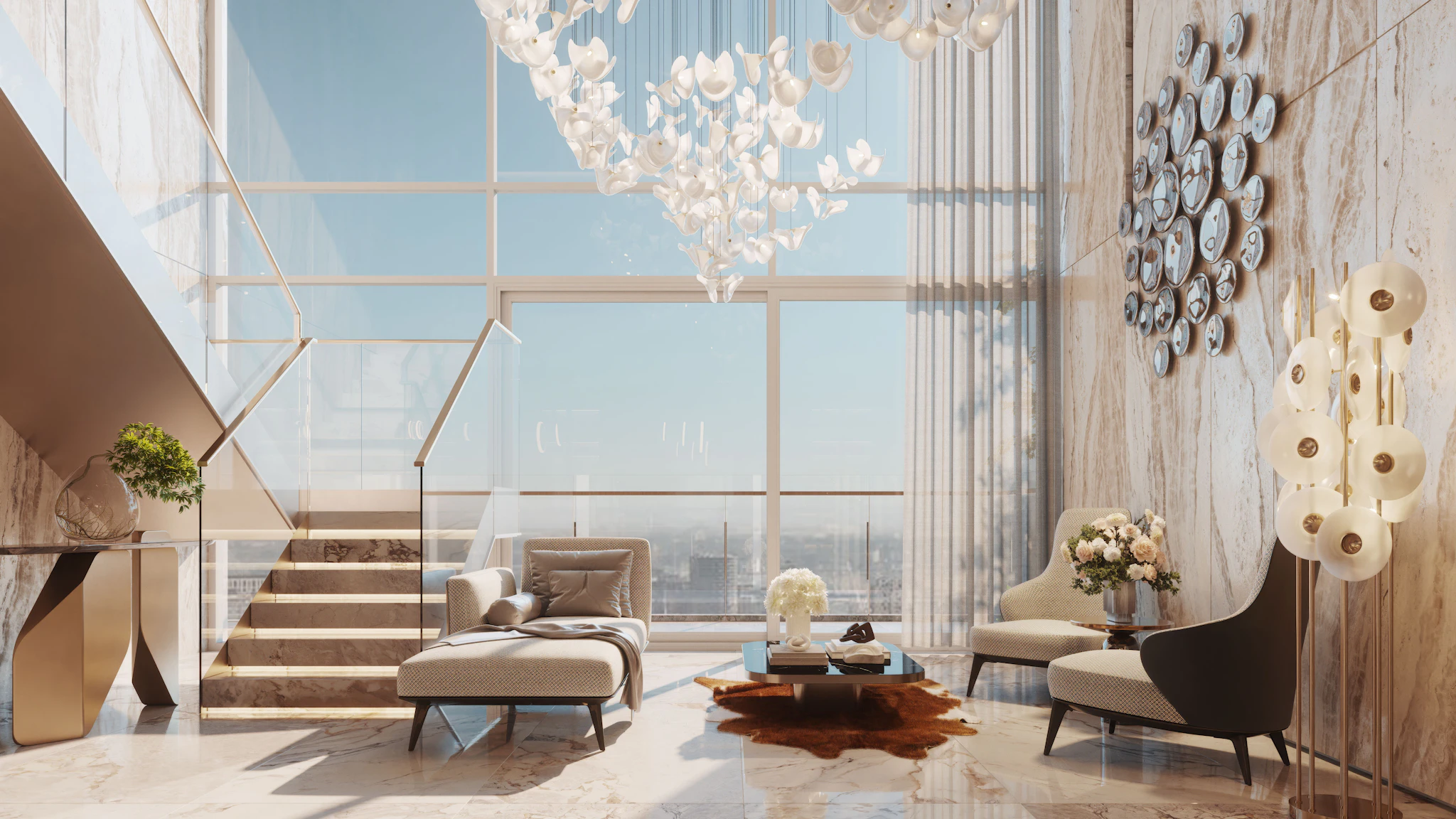
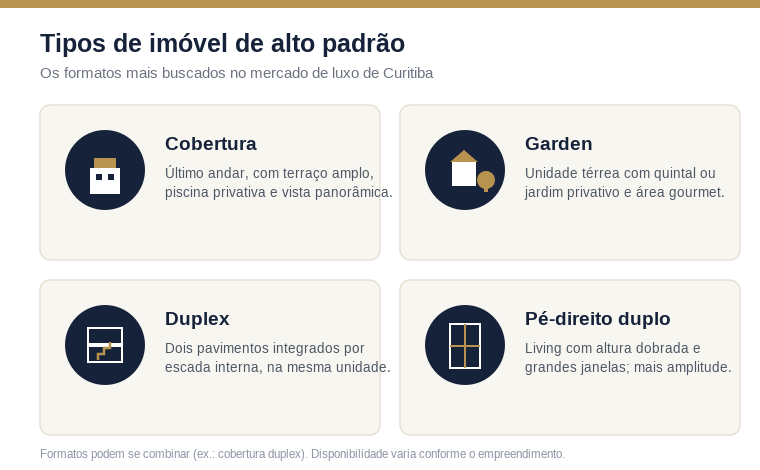
A penthouse is the unit on the top floor of a building, which normally uses the upper slab to create outdoor areas (terrace, deck, pool). Unlike standard apartments, it usually has a larger size, a more generous ceiling height and the best view in the building. In Brazil it is called cobertura; the international equivalent is penthouse.
Types of penthouse
Single-level penthouse
It is laid out on a single floor, usually combining the interior area of a standard apartment with a large terrace. It is practical (everything on the same level) and highly sought after by those who want outdoor space without stairs.
Duplex penthouse
It is spread over two interior floors connected by an internal staircase — for example, the social area downstairs and the private area upstairs, with the terrace on the upper level. It offers the feeling of a "house at the top of the building".
Triplex penthouse
The most exclusive version, on three floors. Rare, it is typical of ultra-luxury developments.
Why a penthouse costs more
Several factors explain the premium price:
- Rarity: there are only one or a few penthouses per building. Scarcity raises value.
- Larger size: more private area than the standard apartments.
- Outdoor areas: a private gourmet terrace, deck, pool and even garden.
- View and privacy: the best view in the building, with no neighbors above.
- Ceiling height and light: often with double-height ceilings and more natural light.
These attributes are exactly the ones that define exclusivity in high-end and luxury properties.
Advantages of a penthouse
- Space and outdoor areas for leisure and entertaining.
- Panoramic view and more privacy.
- Exclusivity and status.
- Appreciation and liquidity — penthouses in good neighborhoods are highly sought after.
Disadvantages and points of attention
- Higher price and condominium fees.
- Maintenance of the outdoor areas (terrace waterproofing, pool).
- Exposure to the weather — terraces require good drainage and waterproofing design.
- Stairs (in the case of duplexes/triplexes), which may not appeal to everyone.
When evaluating a penthouse, check the quality of the waterproofing and of the finishes, as well as the sun orientation of the terrace.
Is a penthouse a good investment?
In upscale neighborhoods, yes. Because they are rare and desirable, penthouses usually have good appreciation and liquidity. The price tag is high and the buyer pool more select, so location weighs even more — a penthouse in Batel or Ecoville tends to appreciate more than one in areas of lower demand.
Penthouse vs. high-floor apartment
Many people confuse the two. A high-floor apartment has a good view and sits on an upper floor, but it is a standard unit — there are others just like it in the building. The penthouse is unique (or nearly so): it sits at the top, uses the slab for outdoor areas and has no neighbors above. If the view is what matters, a high floor will do; if you want a terrace, exclusivity and the best unit in the building, go for the penthouse.
Tips for buying a penthouse without mistakes
- Waterproofing: check the condition and the warranty of the terrace — it is the most sensitive point.
- Sun orientation: a sun-facing terrace enhances its use (and the view).
- Structure for a pool/spa: verify whether the slab can support what you plan.
- Real privacy: make sure neighboring buildings do not overlook the terrace.
- Condominium and maintenance costs: penthouses have proportionally higher costs.
- Finishes: assess the quality of the materials, especially in the outdoor areas. See high-end finishes.
The penthouse as a prestige asset
Because they are rare and desirable, penthouses in upscale neighborhoods usually have high liquidity and appreciation — they are the "showcase product" of many developments. The price tag is high and the buyer pool more select, so location weighs even more at resale.
Questions people also ask
Is a penthouse the same as a cobertura?
Yes, "penthouse" is the international term equivalent to cobertura: the unit on the top floor, with more space, a large terrace and the best view in the building. The name changes, but the concept is the same.
What is the difference between a penthouse and a high-floor apartment?
A high-floor apartment has a good view, but it is a standard unit, with others just like it in the building. The penthouse is unique (or nearly so): it sits at the top, uses the slab for outdoor areas and has no neighbors above. If the view is what matters, a high floor will do; if you want a terrace and exclusivity, go for the penthouse.
Is a penthouse a good investment?
In upscale neighborhoods, yes: because they are rare and desirable, penthouses usually have good appreciation and liquidity. Since the price tag is high and the buyer pool more select, location weighs even more. A penthouse in Batel or Ecoville tends to appreciate more than one in areas of lower demand.
Does every penthouse have a private pool?
No. Many penthouses have a terrace, deck and gourmet area, but a private pool depends on the design and on the capacity of the slab. Before planning one, check whether the structure can support the weight and whether there is an adequate water supply point and drainage.
Frequently asked questions
What is the difference between a penthouse and a regular apartment?
The penthouse is on the top floor, with a larger area, a large terrace and the best view in the building. The standard apartment is on intermediate floors, with a standardized size and without the penthouse's exclusive outdoor areas.
Single-level or duplex penthouse: which is better?
The single-level one is practical (everything on one floor, no stairs); the duplex offers the feeling of a house, separating the social and private areas on two levels. The choice depends on your lifestyle and on how you feel about stairs.
Why is a penthouse more expensive?
Because of rarity (few per building), larger size, private outdoor areas (terrace, pool), a better view and privacy. These are attributes of exclusivity that raise the price in the high-end segment.
Does a penthouse require a lot of maintenance?
It requires care with the terrace waterproofing and with the pool/outdoor areas. Good design and preventive maintenance prevent problems. The condominium fee also tends to be higher.
Looking for a high-end penthouse in Curitiba? In Antológica's listings you can filter penthouses by neighborhood, area and price. Talk to Antológica or see how we work.
Free download: the Curitiba High-End Property Buyer's Guide, covering neighborhoods, costs, paperwork and the checklist of what to evaluate before buying.
Content produced by Fernando Moreno, partner at Antológica and specialist in Curitiba's high-end real estate market.