Finishes, architecture and design
Home automation: what is worth it
Home automation in the high-end segment: what is really worth it in a smart home, systems, costs, infrastructure and how to avoid mistakes in the investment.
By Fernando Moreno
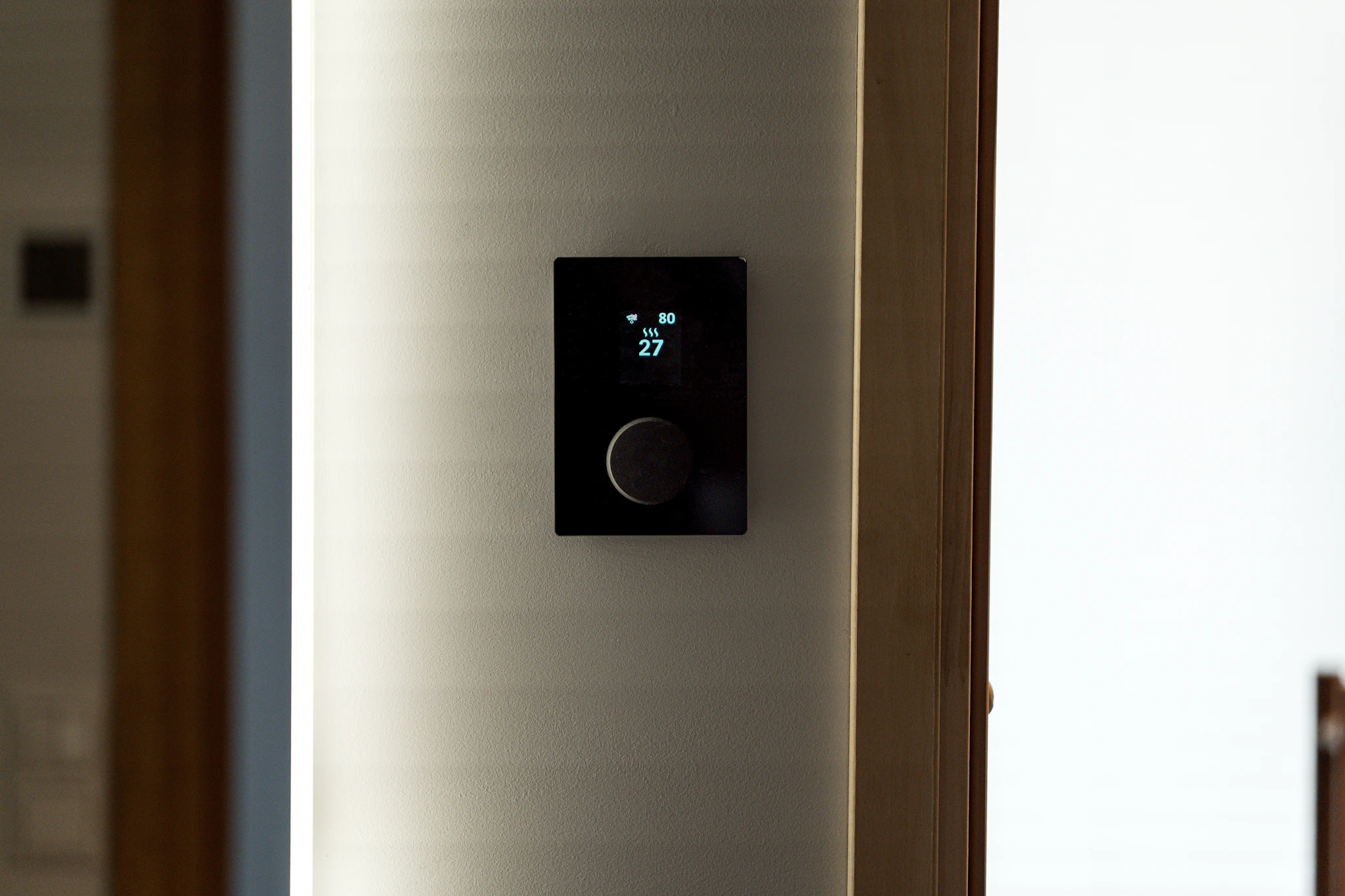
Quick answer: in the high-end segment, home automation is no longer a "gadget" and has become an expected feature. What is most worth it: smart lighting with scenes, automated climate control, motorized curtains and blinds, multiroom audio, integrated security (cameras, locks, alarm) and app and voice control. The secret is to plan the infrastructure during construction (cabling and outlets), prioritize what is used every day and keep the technology discreet and integrated into the architecture — not exposed. Robust systems (such as KNX) ensure durability and interoperability.
The smart home is one of the hallmarks of today's high-end segment — but not all automation is worth the investment. Some of it transforms daily life, and some becomes an expensive, forgotten trinket. See what really pays off and how to plan without waste. For the finishes context, see the guide high-end finishes.
The golden rule: invisible technology
Automation in 2026 is sophisticatedly invisible: integrated into the architecture, not exposed. Luxury is not in showing off screens and controls, but in the house simply working — the light at the right intensity, the ideal temperature, the movie scene at a single touch. When done well, automation personalizes the experience without drawing attention to itself.
What is most worth automating
1. Lighting with scenes
It is the item with the greatest impact and the best cost-benefit. It enables programmed scenes ("dinner", "movie", "entertaining", "sleep"), dimming, and activation by app, voice or presence. It transforms how the spaces are perceived. It goes hand in hand with a good lighting design.
2. Automated climate control
Smart control of air conditioning and heating, by room and by time of day, with temperature sensors. Comfort and energy savings — the system only heats or cools what it needs to, when it needs to.
3. Motorized curtains and blinds
Real day-to-day convenience, especially on large, tall windows (common in high-end homes) where manual operation is impractical. They integrate with the scenes (the curtain opens together with the lights in the morning).
4. Multiroom audio
Built-in ambient sound distributed across rooms, controlled by app. It allows different music in each space or the same music throughout the house. A classic leisure and wellness feature.
5. Integrated security
Cameras, alarm, sensors, electronic locks and access control, unified and accessible from anywhere. It adds to the condominium's security for layered protection. See security in high-end properties.
6. Unified control (app and voice)
Bringing everything together in one system — a phone app, panels and voice command — is what delivers the true "smart home" experience. Fragmented systems (each thing with its own app) are frustrating.
Table: priority vs. impact
| Feature | Day-to-day impact | Priority |
|---|---|---|
| Lighting with scenes | High | Essential |
| Automatic climate control | High | Essential |
| Motorized curtains | Medium-high | High |
| Integrated security | High | High |
| Multiroom audio | Medium | Depending on profile |
| Automated irrigation | Medium | If there is a garden |
| Connected appliances | Low-medium | Optional |
The most important step: the infrastructure
Here is the mistake that costs the most: leaving the infrastructure for later. Cabling, electrical and network outlets, space for the control hub — all of this is much cheaper and cleaner to install during construction. Even if you will only automate part of it now, leave the infrastructure ready (cables and outlets) so you can expand without breaking walls later.
That is why, when evaluating an off-plan property, check whether infrastructure for automation is provided. It is a differentiator that adds value.
Systems: from robust to plug-and-play
There are two main paths:
- Wired, robust systems (e.g., KNX): an international standard, highly reliable, interoperable and durable. Suited to high-end projects and whole houses. Requires professional design and installation.
- Wireless / plug-and-play systems (Zigbee, Z-Wave, Wi-Fi, with the Matter standard unifying interoperability): more flexible and easier to install/expand, good for one-off automations or renovations. They may be less robust in very large houses.
In the high-end segment, it is common to combine them: a robust wired base for the essentials and wireless devices for add-ons.
What is usually not worth it
- Automating for the sake of automating: features you will never use only add cost and complexity.
- "Smart" appliances as a priority: a refrigerator with a screen, for example, rarely justifies the cost.
- Fragmented systems: many different apps for each function frustrate the experience.
- Bleeding-edge, unstable technology: prefer what is established and has guaranteed support.
Automation and appreciation
A well-automated house, with solid infrastructure and an integrated system, is perceived as more modern and comfortable — and that weighs on resale. The caveat is not to overdo niche technology that dates quickly. The safe bet: excellent infrastructure + automation of the essentials (lighting, climate, curtains, security), integrated and discreet. It matches the language of 2026 design, in which technology serves the space without showing.
Questions people also ask
What is the KNX system in home automation?
KNX is an international standard for wired automation, recognized for its reliability, durability and interoperability between different brands. It is the preferred system in high-end projects and whole houses, because it supports many devices without losing stability. It requires professional design and installation, but delivers a solid foundation that lasts for decades.
Can you automate a ready apartment without construction work?
Yes. Wireless systems, such as those based on Zigbee, Z-Wave and Wi-Fi (with the Matter standard unifying brands), let you automate lighting, curtains, climate control and security without breaking walls. They are ideal for renovations and one-off automations, although they may be less robust than wired systems in very large houses. It is the most practical path for those who already live in the property.
Does a smart home keep working if the internet goes down?
In well-designed systems, yes: the automation logic runs on a local hub, so scenes, switches and essential commands keep working even without internet. What you lose is remote control through the app when you are away from home and some cloud-based voice commands. That is why, in the high-end segment, priority goes to a system with local processing, not fully dependent on the cloud.
Does home automation use a lot of energy?
No — in practice, it tends to reduce consumption. Smart climate control and lighting only switch on what is needed, when it is needed, and scenes like "leaving home" turn everything off at once. The consumption of the control devices themselves is low. When well configured, automation partly pays for itself through energy savings over time.
Frequently asked questions
Is it worth automating a high-end house?
Yes, especially lighting with scenes, climate control, motorized curtains and integrated security — everyday items that transform comfort. The secret is to plan the infrastructure during construction and prioritize what is really used, keeping the technology discreet.
How much does it cost to automate a house?
It varies widely depending on the size of the house, the system chosen (robust wired vs. wireless) and the number of rooms and features. Most of the value lies in the infrastructure and the integration. It is worth getting quotes from specialized integrators and prioritizing in stages, always leaving the infrastructure ready.
What is most important in home automation?
The infrastructure (cabling and outlets), done during construction, and the integration of everything into a single system. Without good infrastructure, expanding later is expensive and requires construction work; without integration, the experience becomes fragmented and frustrating.
What is the Matter standard?
It is an interoperability standard that lets devices from different brands work together in a smart home, reducing fragmentation. It makes it easier to combine products without being locked into a single manufacturer.
Looking for a property ready for a smart home? At Antológica you can get to know high-end developments in Curitiba with infrastructure for automation. Talk to Antológica or see how we work.
Free download: the Curitiba High-End Property Buyer's Guide, covering neighborhoods, costs, documentation and the checklist of what to evaluate before buying.
Content produced by Fernando Moreno, partner at Antológica and a specialist in Curitiba's high-end real estate market.