Finishes, architecture and design
Custom cabinetry: why it's worth it in high-end homes
Custom cabinetry in high-end homes: how it differs from modular units, materials, premium hardware and why it adds so much value to a luxury property.
By Pedro Carvalho
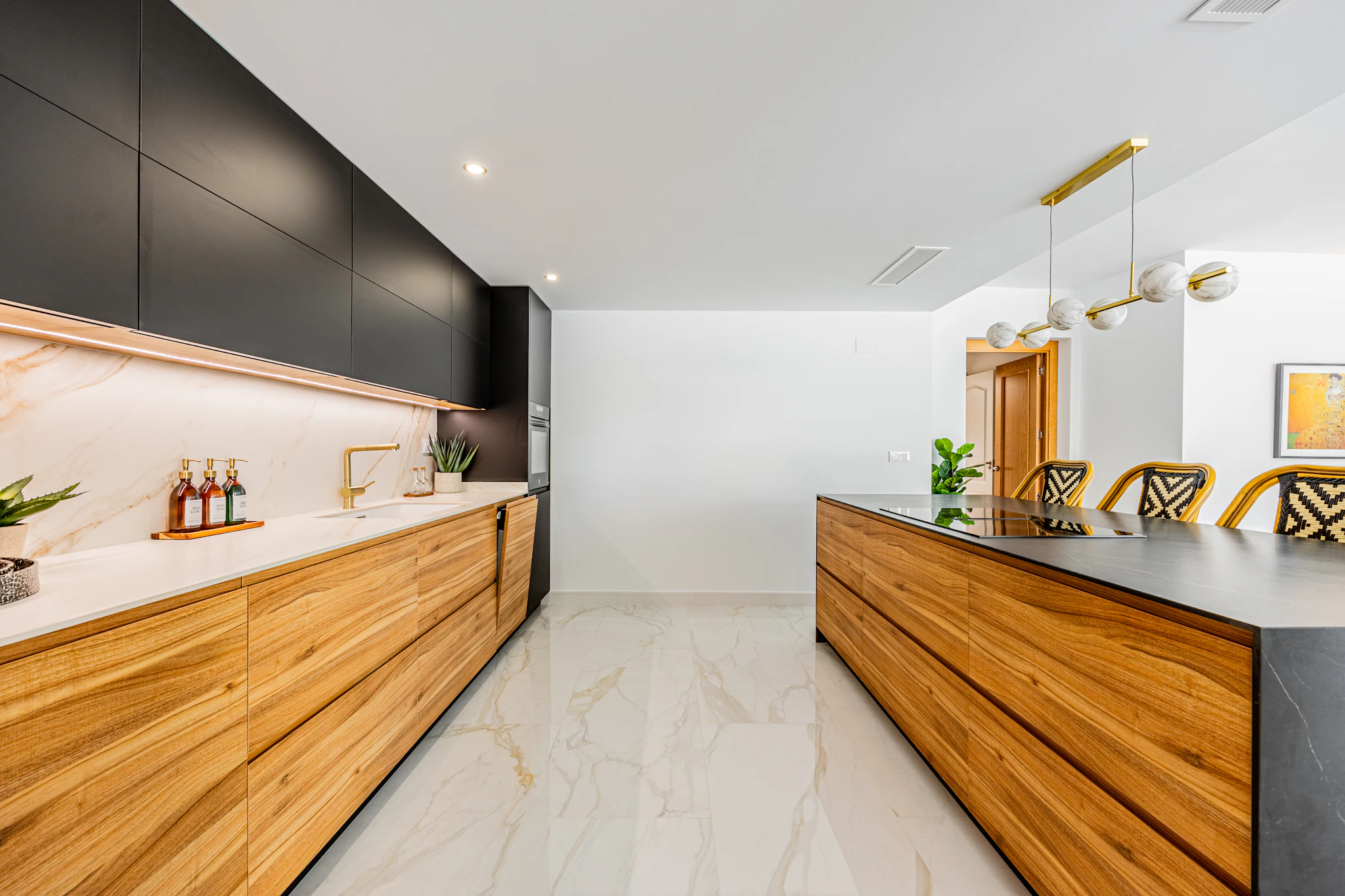
Quick answer: custom cabinetry is designed and built specifically for each room, unlike modular furniture (in standard sizes). In high-end homes it is essential because it makes use of every inch, integrates with the architecture, allows for fine materials (natural wood veneer, lacquer, specialty veneers) and premium hardware (soft-close slides and hinges, touch-to-open). It is one of the features that adds the most value to a property — and one that most sets genuine finishes apart from an ordinary standard.
You can have the best surfaces and the best lighting, but it is the cabinetry that organizes life in the home and ties the design together. In high-end homes, it is almost never off the shelf: it is made to measure. Here is why and what to look for. For the big picture, see high-end finishes.
Custom vs. modular cabinetry: the difference
| Aspect | Custom | Modular/semi-custom |
|---|---|---|
| Dimensions | Exact for the room | Standard (fixed modules) |
| Use of space | Maximum | Limited by the modules |
| Materials and finishes | Wide freedom | Manufacturer's catalog |
| Design | Personalized | Predefined |
| Integration with the architecture | Total | Partial |
| Lead time and cost | Higher | Lower |
Modular units (from semi-custom furniture stores) are a good cost and lead-time solution in many cases. But in high-end homes, where rooms have specific proportions (high ceilings, irregular gaps, niches) and exclusivity is the goal, custom cabinetry delivers what modular cannot: total use of space and seamless integration.
Why custom cabinetry adds value
- It makes use of every inch: it fills gaps, wraps around columns, uses the full ceiling height — space that modular units waste.
- It integrates with the architecture: panels that conceal doors, cabinetry that becomes a bookcase that becomes a countertop, visual continuity.
- It allows fine, exclusive materials: natural wood veneers, lacquer, specialty veneers — finishes that give the home its identity.
- Tailored storage solutions: closets, pantries, internal drawers, dividers designed around the resident.
- Durability: well made, with good materials and hardware, it lasts for decades.
High-end buyers notice and value well-made cabinetry — it is one of the hallmarks of genuine finishes.
High-end cabinetry materials
- MDF with natural wood veneer: the look of real wood (with its unique grain) on a stable base. Sophisticated and warm.
- Lacquer (lacca): a smooth, uniform painted finish, matte or satin, in colors from the neutral palette. Elegant and contemporary.
- Solid wood: fine and durable, used in specific pieces (more prone to movement with humidity).
- Premium veneers and laminates: a wide range of high-quality textures and patterns.
The choice balances aesthetics, durability and budget — and usually combines materials (wood veneer in feature areas, lacquer elsewhere).
Hardware makes the luxury
One detail separates ordinary cabinetry from premium: the hardware. In high-end homes, you should expect:
- Damped drawer slides and hinges (soft-close) — they close gently, without slamming.
- Touch-to-open (push) or recessed pulls — a clean look, with no visible hardware.
- Internal organization systems — dividers, spice racks, drawer units, pull-down clothes rails.
- Hardware brands known for durability and smooth operation.
Pulls, when visible, follow the trend for matte metal finishes. Quality hardware is what ensures the cabinetry keeps working well for years.
Where custom cabinetry matters most
- Kitchen: the most technical room — floor-to-ceiling cabinets, island, pantry, integration with built-in appliances and countertops (paired with porcelain or quartz).
- Closet: the ultimate example of custom work — total organization, internal lighting, a central island, space for every category.
- Home office: workstations, bookcases and integrated cable management.
- Living room: TV panels, media consoles, bookcases and cabinetry that conceals functions.
- Bathrooms: custom vanities that make the most of the space and resist moisture.
The role of the design project
Custom cabinetry requires a design project — by an architect or interior designer who details every piece, integrates it with the electrical, plumbing and lighting, and ensures consistency across rooms. This project is what prevents costly mistakes (a drawer that won't open because it hits the door, a niche out of proportion) and turns the cabinetry into part of the architecture. In high-end homes, the project is not a cost — it is what protects the investment.
Is the higher cost worth it?
Custom cabinetry costs more and takes longer than modular. It is worth it when the room has particularities that modular units don't handle well, you are after exclusivity and durability, and you see the property as a long-term asset. For simple, standardized rooms, modular may be enough. In high-end homes, however, custom cabinetry tends to be the rule precisely because it delivers the level of finish and use of space the segment expects.
Questions people also ask
How long does custom cabinetry take?
The timeline usually ranges from a few weeks to a few months, adding up design, fabrication and installation — much longer than buying ready-made modular furniture. Kitchens and closets, which are more complex, take longer. That's why custom cabinetry needs to be planned well in advance within the construction or moving schedule.
Is custom cabinetry much more expensive than semi-custom?
Yes, it usually costs more than store-bought modular units, because it is designed piece by piece, with better materials and hardware and skilled labor. In return, it uses 100% of the space, integrates with the architecture and lasts longer. In high-end homes, the cost difference is justified by the finish and by the value it adds to the property.
MDF with wood veneer or solid wood: which is better?
Each has its place. MDF with natural veneer offers the look of real wood with greater stability, without the risk of warping as humidity changes — it is the most widely used option for cabinets and panels. Solid wood is fine and durable, suited to specific pieces, but requires more care with the wood's natural movement. Combining the two is common in high-end homes.
How do you care for high-end cabinetry so it lasts?
Maintenance is simple but constant: clean with a soft, slightly damp cloth and a neutral product, avoiding excess water and abrasives that damage lacquers and veneers. Dry splashes quickly, especially near sinks and wet areas, and periodically check the hardware adjustment. Well cared for, with good materials and quality hardware, cabinetry lasts for decades.
Frequently asked questions
What is the difference between custom and semi-custom cabinetry?
Custom cabinetry is designed and built to the exact dimensions of each room, with wide freedom of materials and design. Semi-custom/modular units use standard-size modules and a closed catalog. Custom makes better use of space and allows more exclusivity, at a higher cost and with a longer lead time.
Does custom cabinetry add value to a property?
Yes. It is one of the features that best convey genuine finishes in high-end homes: it makes use of the space, integrates with the architecture and uses fine materials and hardware. Buyers notice well-made cabinetry and pay for it.
What materials are used in high-end cabinetry?
MDF with natural wood veneer, lacquer (a smooth painted finish), solid wood in specific pieces and premium veneers. The choice balances aesthetics, durability and budget, usually combining materials.
What makes cabinetry hardware premium?
Damped closing (soft-close), touch-to-open or recessed pulls, internal organization systems and brands known for durability. Hardware is what ensures the cabinetry keeps working well for many years.
Looking for a property with genuine finishes, from the cabinetry to the lighting? At Antológica you get to know high-end developments in Curitiba and what sets them apart. Talk to Antológica or see how we work.
Free download: the Curitiba High-End Property Buyer's Guide, with neighborhoods, costs, paperwork and a checklist of what to assess before you buy.
Content produced by Pedro Carvalho, partner at Antológica and specialist in Curitiba's high-end real estate market.