Finishes, architecture and design
High-end porcelain tile: types and how to choose
High-end porcelain tile: types, finishes, large format, marble and wood effects, and how to choose the right one for each luxury space.
By Fernando Moreno
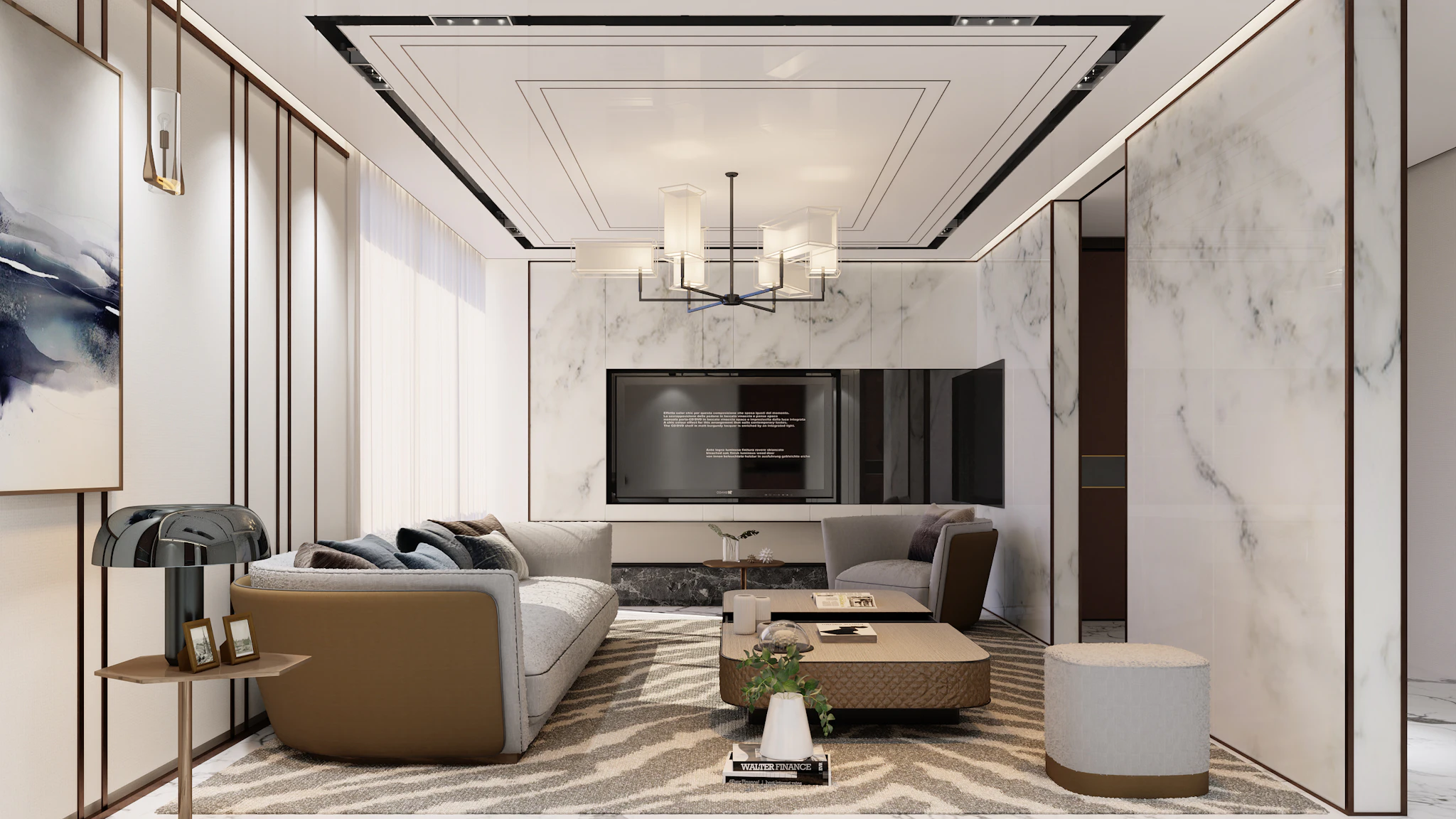
Quick answer: high-end porcelain tile stands out for its large format (slabs of up to 120x240 cm or larger, with fewer grout lines), its advanced printing technology (realistic marble, wood and cement effects) and finishes such as polished, satin/natural and wood-look. To choose, consider the space (dry or wet area, indoor or outdoor), the finish (slip-resistant in wet areas), the format and the durability (PEI rating for floors). Porcelain tile offers the look of fine stone with more durability and less maintenance.
Porcelain tile is no longer an "economical" option and has become a star of high-end design. Today's technology reproduces rare marbles, fine woods and burnished cement with impressive realism — and delivers what natural stone does not always offer: durability, low maintenance and huge formats. Here are the types and how to choose the right one for each space. For an overview of materials, see high-end finishes.
Why porcelain tile dominates the high-end segment
Premium porcelain tile combines three advantages that are hard to beat:
- Realism: high-definition digital printing reproduces marble veining, wood knots and cement textures with depth.
- Durability: low water absorption (generally below 0.5%), plus hardness and durability superior to most stones.
- Low maintenance: it does not demand the constant care of marble, does not stain easily and keeps its look for years.
Add to that the large format, which reduces grout lines and creates continuous, elegant surfaces.
Types of porcelain tile by finish
The surface finish defines the look and the ideal use:
| Finish | Look | Recommended for |
|---|---|---|
| Polished | Glossy, sophisticated | Dry indoor areas (living rooms, bedrooms) |
| Satin/natural | Soft, velvety matte | Versatile, indoor |
| Natural/matte | No shine, understated | Contemporary spaces |
| Wood-look | Imitates wood | Coziness, social and private areas |
| Outdoor/slip-resistant | Grip texture | Wet areas, balconies, pool |
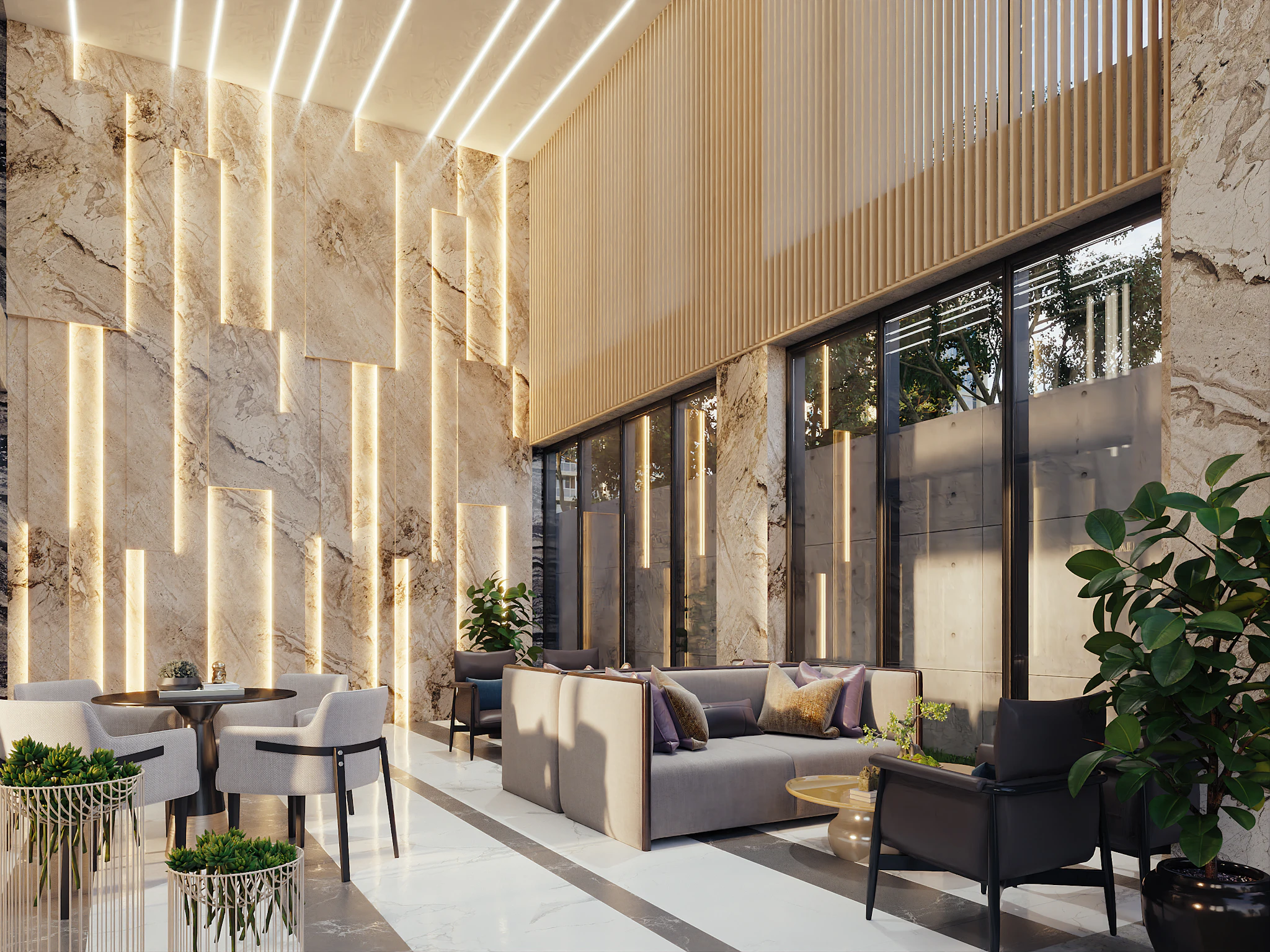
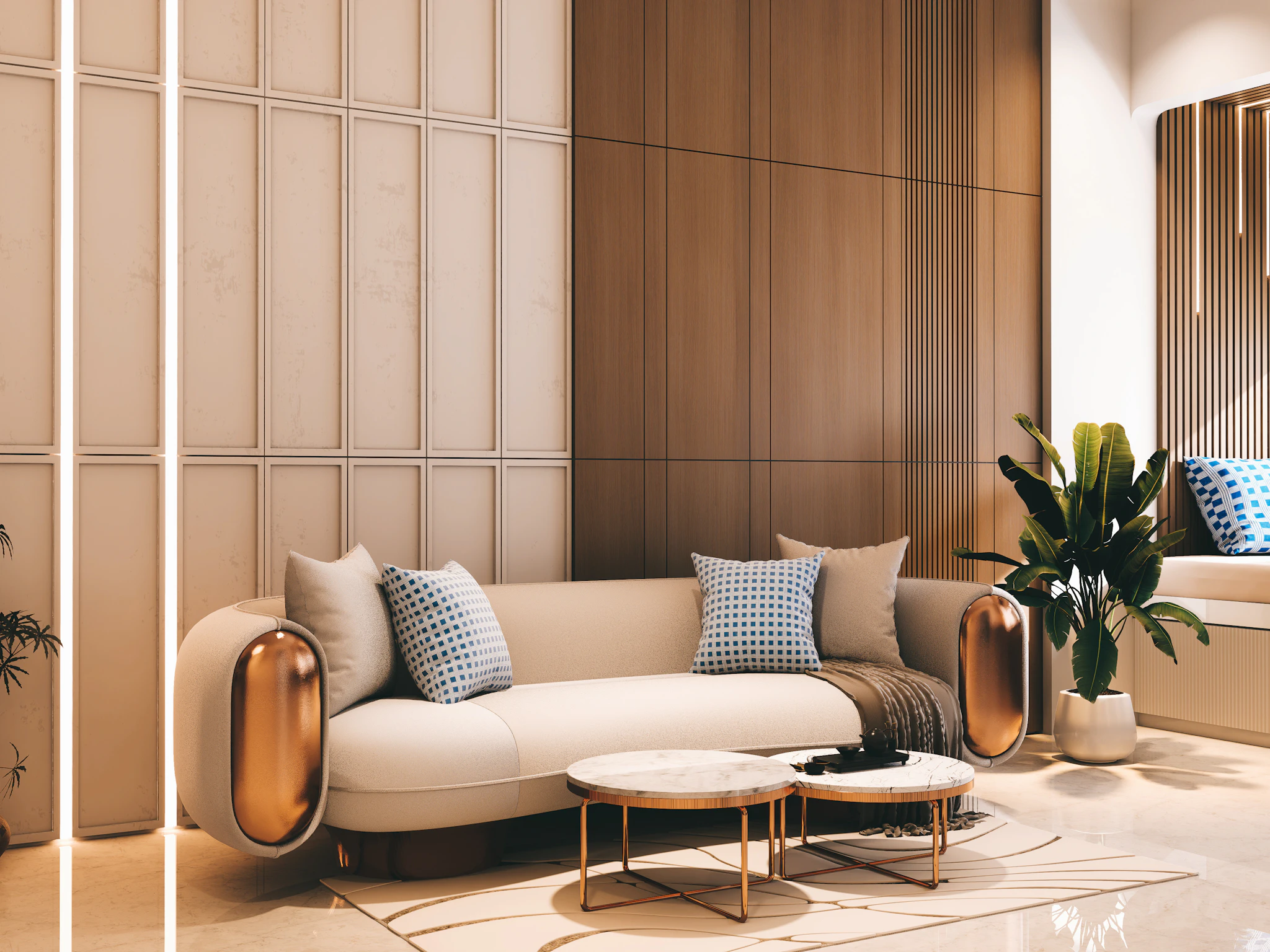
In high-end homes, satin and polished marble-effect tiles lead in the social areas; wood-look tile brings warmth to bedrooms and walk-in closets; and slip-resistant tile is mandatory in wet and outdoor areas, for safety.
Large format: the hallmark of today's luxury
Large tiles — 90x90, 120x120, 120x240 cm and even bigger slabs — are a signature of high-end design. Advantages:
- Fewer grout lines, creating nearly continuous, visually cleaner surfaces.
- A sense of spaciousness in the rooms.
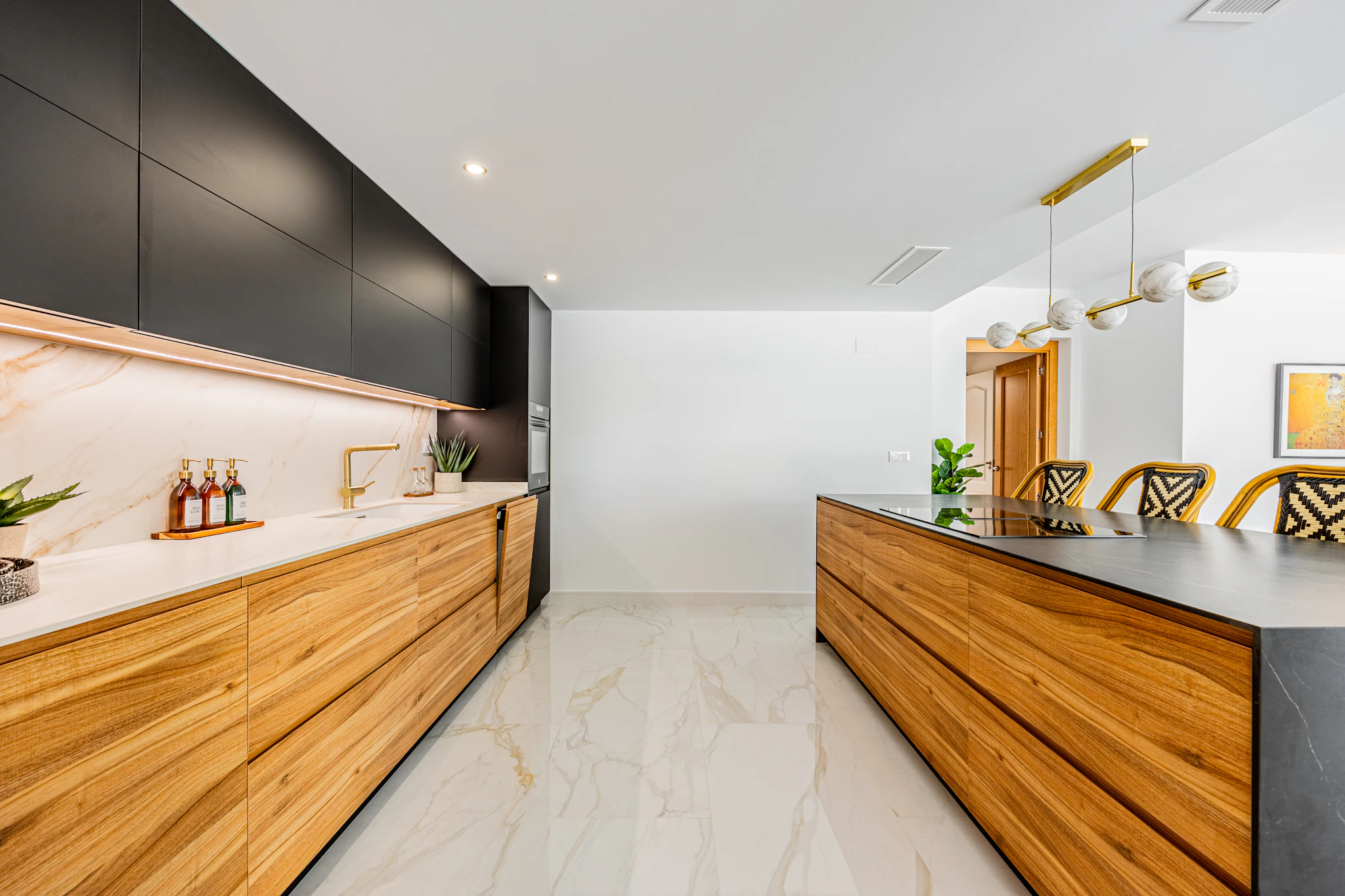
- Use on countertops, walls and feature panels, not just on floors.
The trade-off is technical: large tiles require specialized labor for installation and a perfectly leveled subfloor. It pays to invest in a good installer.
The most sought-after effects in high-end homes
- Marble effect: the favorite. It reproduces Calacatta, Carrara and exotic marbles — with striking veining and shine, without the maintenance of natural stone.
- Wood effect: brings coziness without the wear and maintenance of real wood flooring.
- Cement/concrete effect: an industrial, contemporary look, in a minimalist vein.
- Natural stone effect: travertine, slate and other earthy textures, popular with the natural palette of 2026.
Porcelain tile vs. marble vs. quartz: when to use each
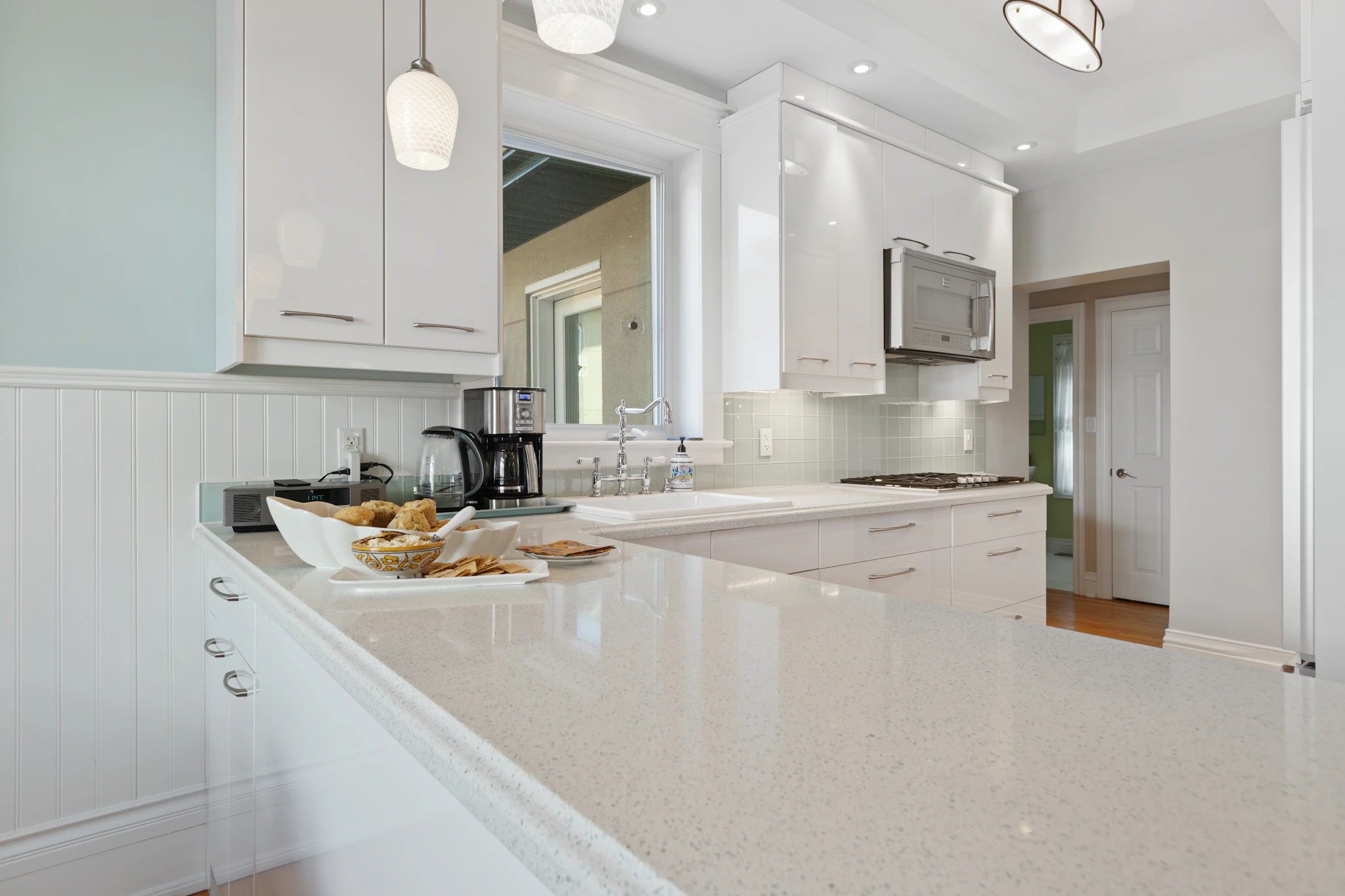
Porcelain tile does not always replace natural stone — each material has its place. Marble delivers exclusivity and the "made by nature" appeal; quartz is unbeatable for kitchen countertops thanks to its stain resistance; porcelain tile wins on large surfaces, in wet areas and wherever you want a noble look with low maintenance. See the full comparison in marble, quartz or porcelain tile.
How to choose the right porcelain tile
Follow this checklist:
- Define the space: dry or wet area? Indoor or outdoor? This determines the finish (slip-resistant wherever there is water).
- Choose the effect that fits the design (marble for sophistication, wood for coziness, cement for a contemporary feel).
- Define the format: large format adds value but requires careful installation.
- Check the durability: for high-traffic floors, look at the resistance to abrasion (PEI) and to scratching.
- Look for rectified tiles: rectified porcelain tiles have precise edges and allow minimal grout lines — the standard in high-end homes.
- See the tile in person: photos can be misleading. Evaluate the actual piece, ideally laid out.
Maintenance care
Although durable, premium porcelain tile calls for simple care: cleaning with neutral products (avoid acids and abrasives on polished surfaces), attention to the grout (prefer quality grout, and epoxy in wet areas) and care with point impacts on polished tiles. Well maintained, it keeps its look for many years — one of the reasons it helps sustain the property's value. Pair it with custom joinery and the right palette for a cohesive result.
People also ask
What is the PEI rating of porcelain tile?
PEI is the scale that measures the glazed surface's resistance to abrasion — that is, to wear from foot traffic. It ranges from PEI 1 (light use, such as bedrooms) to PEI 5 (high traffic). For floors in the social and circulation areas of high-end homes, it is worth choosing a PEI suited to the use, ensuring the floor keeps its appearance for many years.
Wood-look porcelain tile or real wood flooring?
Wood-look porcelain tile delivers the visual warmth of wood with much more resistance to water, scratches and wear, and almost no maintenance — ideal for wet and high-traffic areas. Natural wood brings authentic warmth and feel, but it requires care and periodic maintenance. In high-end homes, it is common to use wood-look tile in wet areas and real wood in bedrooms and walk-in closets.
What is the difference between glazed and full-body porcelain tile?
Glazed porcelain tile receives a layer of glaze that defines the color and pattern on the surface, allowing realistic marble and wood effects. Full-body (technical) porcelain tile has the same composition throughout its thickness, making it more resistant to deep wear, but with less aesthetic variety. For the noble look of social areas, high-tech glazed tile usually wins; for very heavy use, full-body tile scores points.
What makes installing large-format porcelain tile more expensive?
Large tiles require specialized labor, specific tools for cutting and handling, and a perfectly level subfloor, which raises the installation cost. Higher-quality mortars and grouts, such as epoxy in wet areas, also add to the bill. This investment is essential: an expensive slab laid poorly compromises the entire result.
Frequently asked questions
What is the best porcelain tile for high-end homes?
It depends on the space. In social areas, large-format polished or satin porcelain tiles with a marble effect lead; in bedrooms, wood-look tile brings coziness; in wet and outdoor areas, slip-resistant tile is mandatory. Prioritize rectified, large-format pieces.
Is large-format porcelain tile worth it?
Yes, it is a signature of high-end design: it reduces grout lines, creates continuous surfaces and gives a sense of spaciousness. It does, however, require specialized labor and a well-leveled subfloor for a perfect result.
Is marble-effect porcelain tile better than real marble?
It is not "better", it is different. Marble-effect porcelain tile offers a similar look with much more durability and less maintenance; natural marble brings exclusivity and the unique beauty of stone. The choice depends on the use and the priority.
What is rectified porcelain tile?
It is porcelain tile whose edges are precisely cut after firing, allowing installation with minimal grout lines and more continuous surfaces. It is the preferred standard in high-end homes because of its cleaner finish.
Want a property with truly high-end finishes? At Antológica you go over the delivery finishes of each development with one of the partners, beyond what the brochure shows. Talk to Antológica or see how we work.
Free download: the High-End Property Buyer's Guide to Curitiba — neighborhoods, costs, paperwork and a checklist of what to evaluate before buying.
Content produced by Fernando Moreno, partner at Antológica and specialist in Curitiba's high-end real estate market.