Finishes, architecture and design
Marble, quartz or porcelain: which should you choose?
Marble vs. quartz vs. porcelain in high-end homes: a comparison of resistance, maintenance, price and the ideal use of each material for countertops and cladding.
By Pedro Carvalho and Fernando Moreno
Quick answer: there is no "best" — there is the ideal one for each use. Marble delivers exclusivity and unique beauty, but it is porous, stains and requires maintenance (ideal for low-use areas, such as powder rooms and feature walls). Quartz (engineered stone) is nonporous, highly stain-resistant and uniform — the favorite for kitchen countertops. Porcelain slabs win for large surfaces, wet areas and value for money, with a stone look and low maintenance. The choice depends on use, maintenance and budget.
Countertops, islands, powder rooms, feature walls: the choice of material defines the look and durability of a high-end home. Marble, quartz and porcelain are the three protagonists — and each one shines in a different situation. Here is a direct comparison so you can decide with sound criteria. For the broader context of finishes, see high-end finishes.
Marble: the unique beauty of natural stone
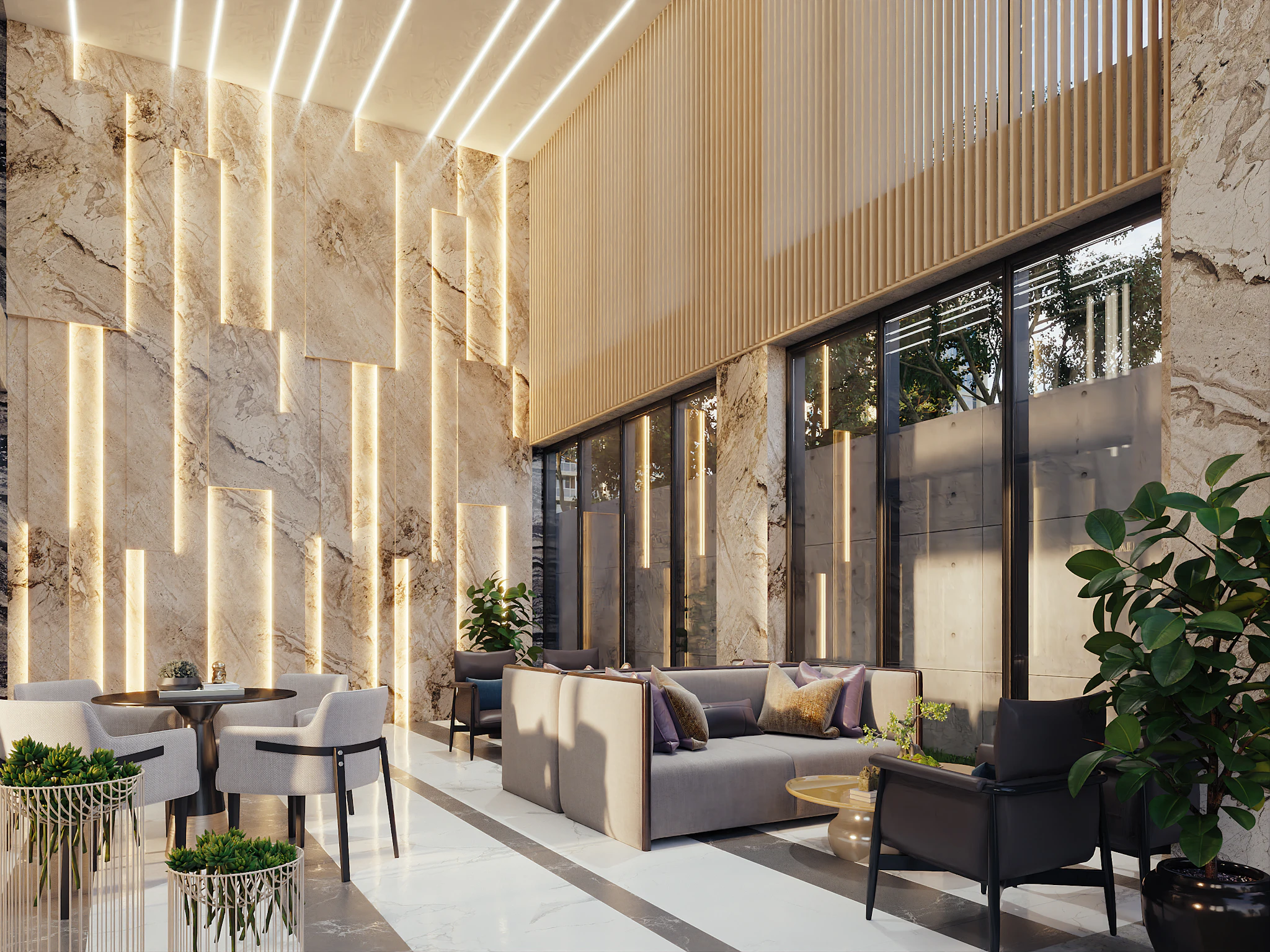
Marble has been synonymous with luxury for centuries. Each slab is unique, with veins formed by nature — Calacatta, Carrara, exotic marbles. It brings a sophistication and exclusivity that no industrial material fully reproduces.
The weak spot: it is a porous and sensitive stone. It stains with acids (lemon, wine, coffee), scratches and can lose its shine. It requires periodic sealing and careful use. That's why, in high-end homes, marble shines where beauty matters more than heavy use: powder rooms, feature walls, bathrooms, tables, floors in formal areas — and less on heavy-use kitchen countertops.
Quartz: the engineered stone of countertops
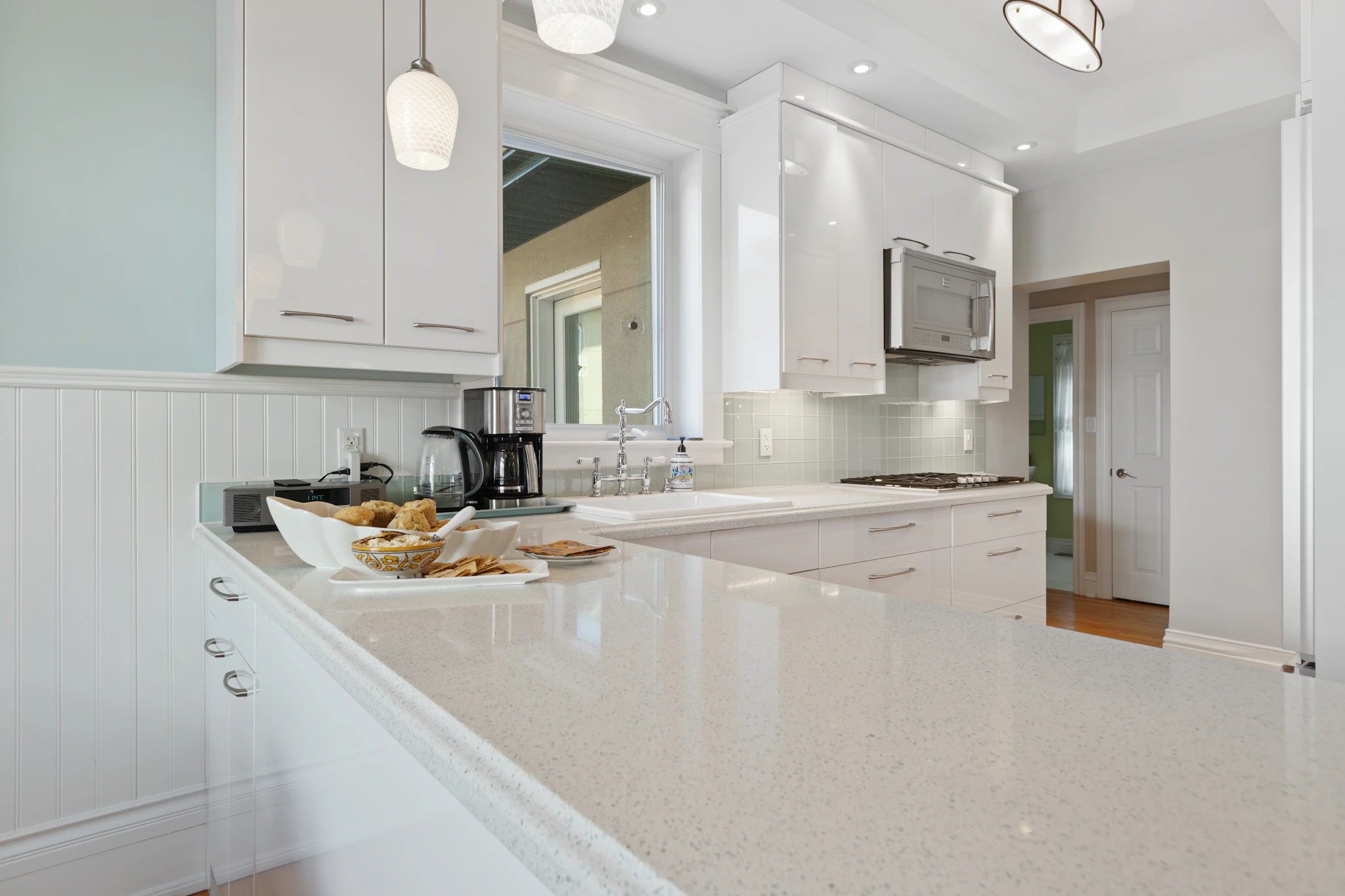
Quartz (or "engineered quartz"/engineered stone) is made with a high proportion of ground natural quartz combined with resins and pigments. The result is a material that is nonporous, highly resistant to stains and scratches, and uniform (you choose the piece knowing exactly how it will look).
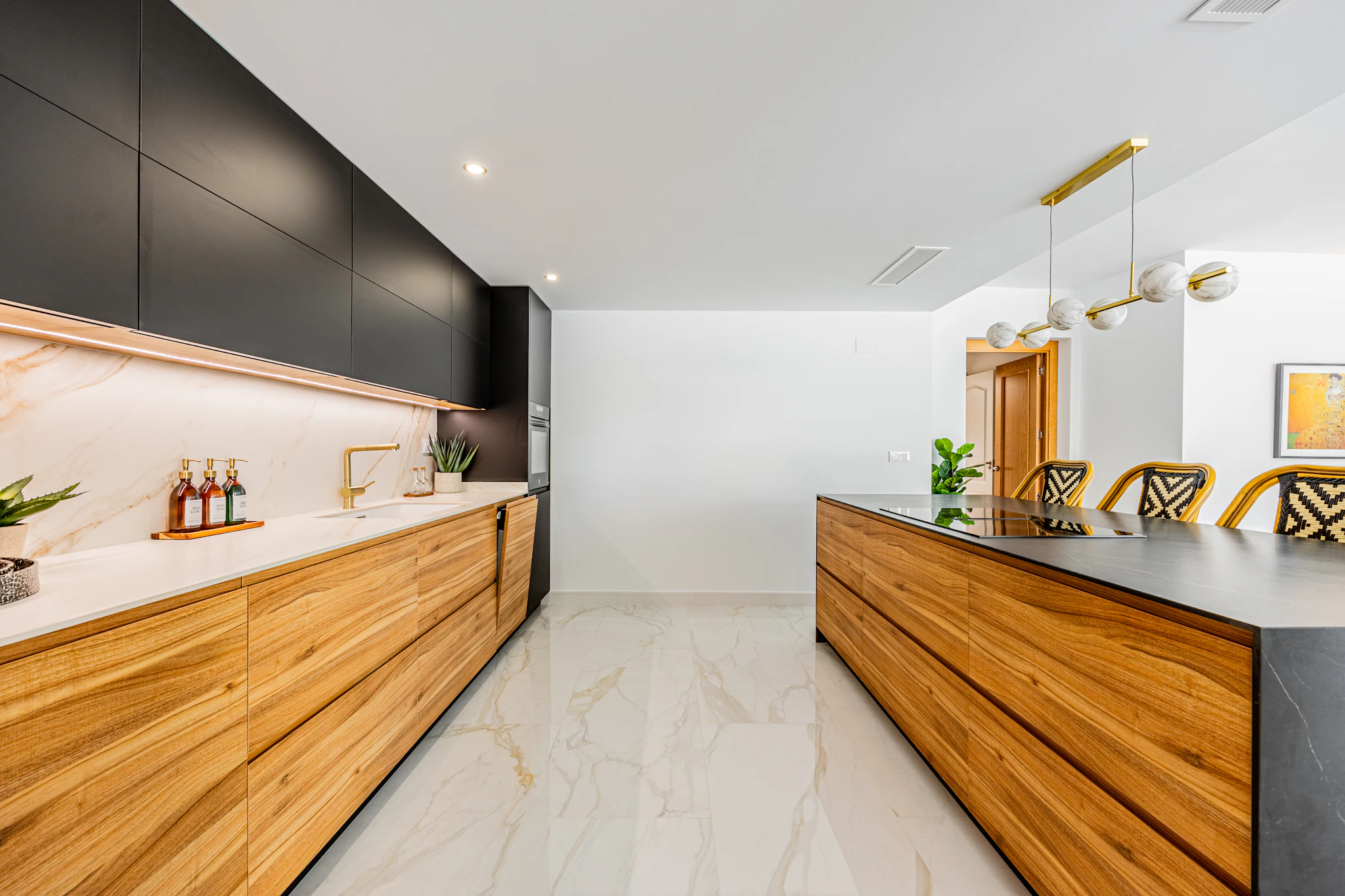
It is the most suitable material for high-end kitchen countertops: it withstands daily use, doesn't absorb liquids and requires little maintenance. Its limitations: it is less resistant to extreme heat (always use a trivet for hot pans) and to prolonged sun exposure (it can yellow), which makes it less suitable for outdoor areas.
Porcelain slabs: versatility and value for money
Porcelain has evolved into large-format slabs that cover countertops, walls and floors with few seams. It is nonporous, durable and low-maintenance and reproduces marble and stone realistically. It wins for large continuous surfaces, wet areas and outdoor areas and usually offers better value for money over large areas. Go deeper in high-end porcelain tile.
The points of attention are the installation of large slabs, which requires specialized labor, and care with point impacts on polished surfaces.
Comparison table: marble vs. quartz vs. porcelain
| Criterion | Marble | Quartz | Porcelain (slab) |
|---|---|---|---|
| Origin | Natural | Engineered | Industrial |
| Visual exclusivity | Maximum (one-of-a-kind piece) | High (uniform) | High (realistic) |
| Stain resistance | Low (porous) | High | High |
| Scratch resistance | Medium | High | High |
| Heat resistance | Good | Limited | Excellent |
| Maintenance | High | Low | Low |
| Outdoor use | Restricted | Not recommended | Yes |
| Best use | Powder rooms, feature walls, bathrooms | Kitchen countertops | Large surfaces, wet areas |
| Cost | High to very high | High | Medium to high |
General resistance ratings and recommendations; check with the manufacturer of each specific line.
Which to choose for each room
- Kitchen (work countertop): quartz, for its resistance to stains and daily use. Porcelain slabs are a great alternative, especially on large islands.
- Powder room and bathrooms: marble shines here — little use, high visual impact. Marble-look porcelain is the practical option.
- Floors in living areas: large-format porcelain, for continuity and low maintenance.
- Outdoor/gourmet areas: non-slip porcelain, which stands up to weather and moisture.
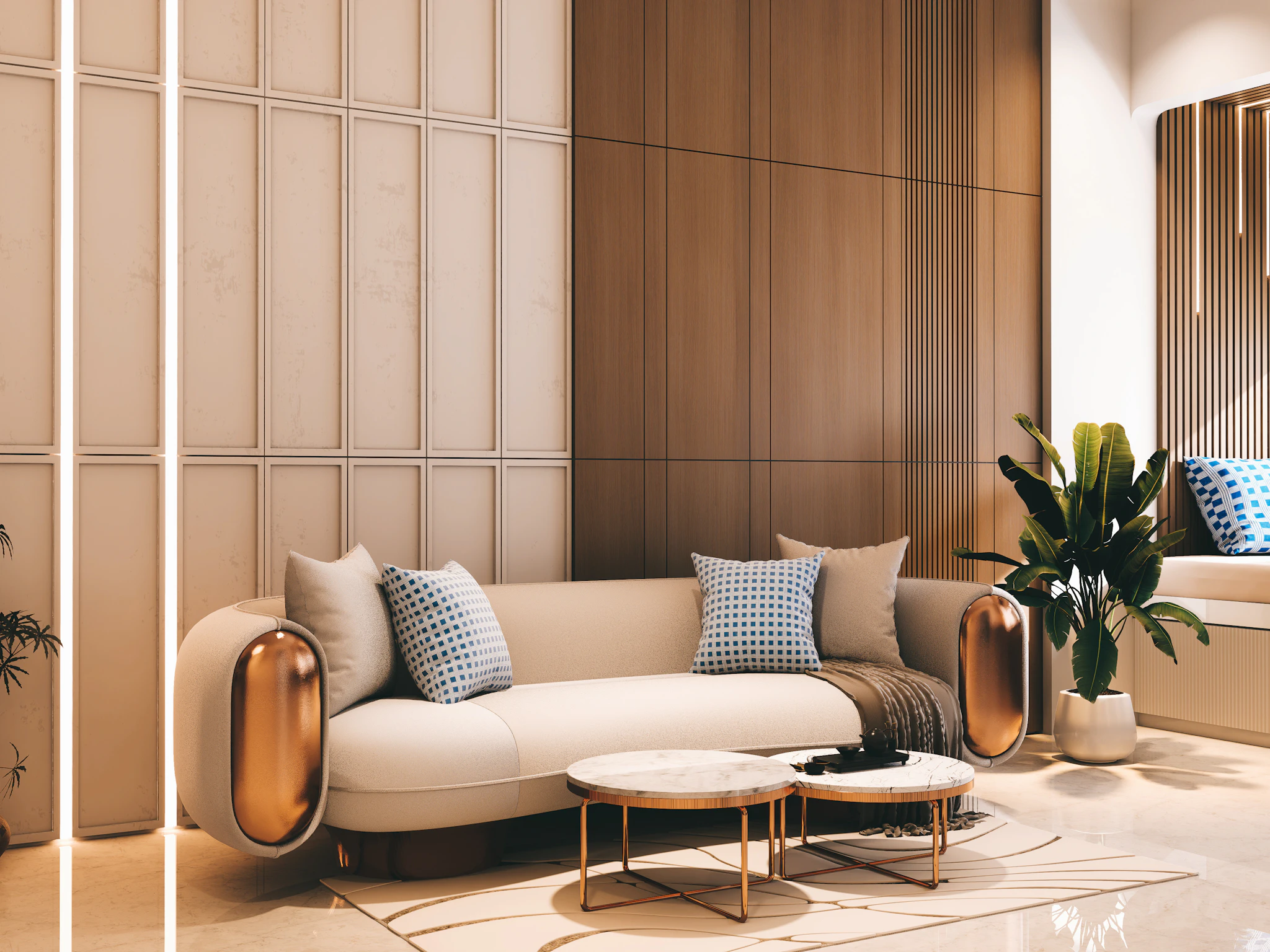
- Feature walls and statement tables: marble or marble-look porcelain, depending on budget.
Trend: the "marble look" everywhere
A 2026 trend worth noting: the marble look remains highly coveted, but is increasingly delivered by porcelain and quartz that reproduce it. That way, residents get the aesthetics of great marbles with the resistance of engineered materials — the best of both worlds for those who prioritize practicality. Natural stone is reserved for the points of greatest impact. Pair the choice with the palette and the interior design and with custom cabinetry for a cohesive result.
Common mistakes when choosing the material
- Using marble on a heavy-use kitchen countertop and being frustrated by stains.
- Setting a hot pan directly on quartz, risking heat damage.
- Choosing from a photo alone — the actual slab (especially with marble and marbled porcelain) can vary considerably.
- Skimping on labor for installing large slabs, compromising the finish.
- Ignoring the maintenance each material requires day to day.
Questions people also ask
How do you care for a marble countertop and remove stains?
Since marble is porous, prevention is the best strategy: seal the stone periodically and wipe up acid spills (lemon, wine, coffee) immediately. For daily cleaning, use only water and neutral soap, never acidic or abrasive products. Set-in stains may require professional polishing — which is why marble performs best in lower-use areas.
What about granite — does it belong in this comparison?
Yes. Granite is another natural stone widely used for countertops, more resistant to scratches and heat than marble and less porous, though with a more granular and less "noble" look. It is a durable option with good value for money for kitchens. In high-end homes, however, marble, quartz and porcelain are usually preferred for their more refined aesthetics.
Does quartz yellow over time?
Quartz can yellow when exposed to direct sunlight for long periods, so it is not recommended for outdoor areas or countertops that get intense sun. Indoors, it keeps its color and appearance for many years, with very low maintenance. For outdoor and gourmet areas, porcelain is the safer choice.
What is the ideal thickness for a high-end countertop?
The visible thickness is largely an aesthetic choice: chunkier countertops (with the edge built up by a double layer or a "skirt") convey solidity and luxury, while thin slabs give a lighter, more contemporary look. Quartz and porcelain slabs allow thin pieces with good strength; marble usually calls for more thickness. The decision takes into account the material, the countertop span and the language of the design.
Frequently asked questions
Marble or quartz for the kitchen countertop?
For a kitchen countertop in daily use, quartz is usually the best choice: it is nonporous, resistant to stains and scratches and requires little maintenance. Marble is more beautiful and exclusive, but porous and sensitive — better reserved for lower-use areas.
Can porcelain replace marble in high-end homes?
In many cases, yes. Marble-look porcelain slabs deliver a similar look with more resistance and less maintenance, at a cost that is usually lower over large areas. Natural marble remains irreplaceable when the goal is the exclusivity of a one-of-a-kind stone.
What is the most resistant countertop material?
In overall resistance, quartz and porcelain outperform marble. Porcelain has the edge with heat and outdoor use; quartz is unbeatable for stain resistance on kitchen countertops. Marble is the most sensitive of the three.
Which is the most expensive: marble, quartz or porcelain?
It depends on the line, but fine and exotic marbles are usually the most expensive, followed by premium quartz. Porcelain slabs tend to offer better value for money on large surfaces, although high-tech lines are premium too.
Looking for a property with genuine finishes? At Antológica you go over the delivery finishes of each development with one of the partners, beyond what the brochure shows. Talk to Antológica or see how we work.
Free download: the Curitiba High-End Property Buyer's Guide, with neighborhoods, costs, paperwork and a checklist of what to assess before you buy.
Content produced by Pedro Carvalho and Fernando Moreno, partners at Antológica and specialists in Curitiba's high-end real estate market.